
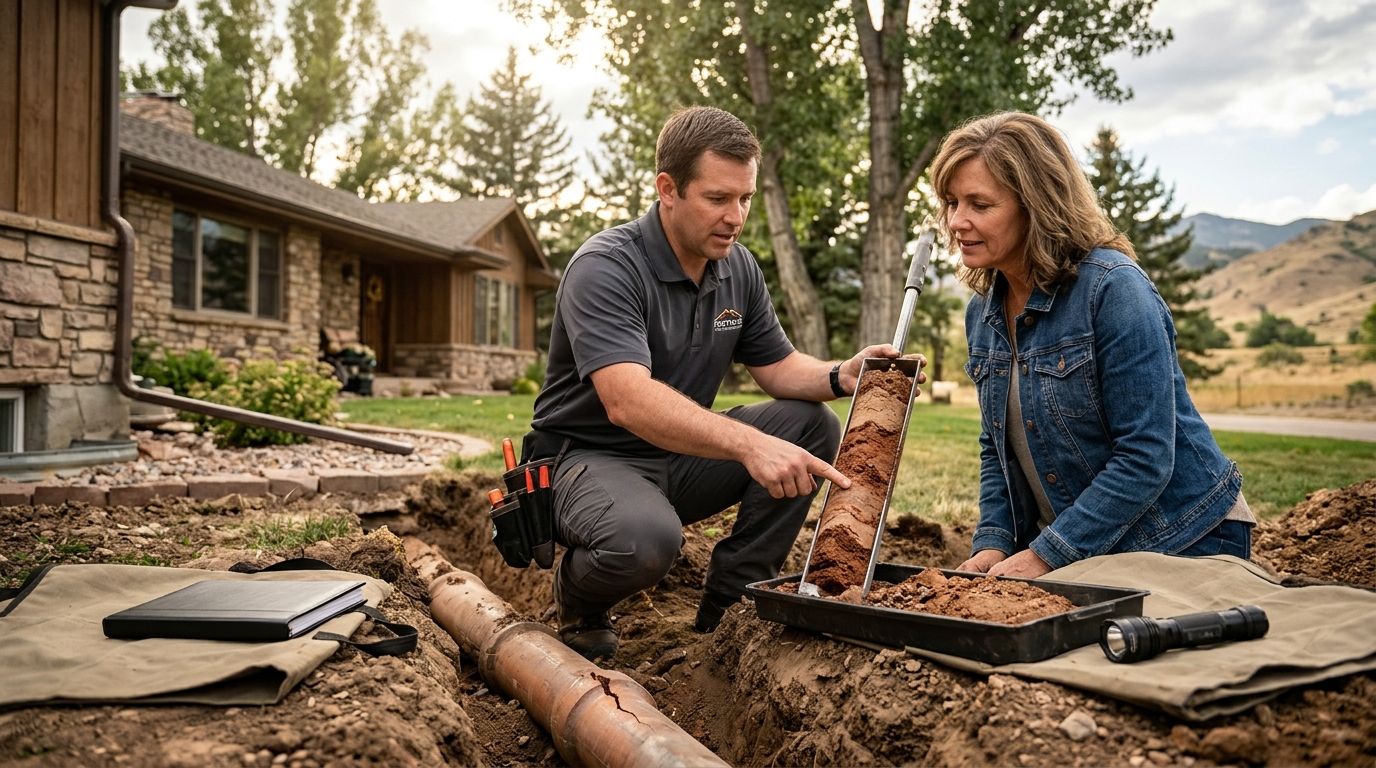
Colorado's diverse geology creates specific challenges for underground infrastructure. Expansive soils, freeze-thaw cycles, and varying moisture levels directly impact the structural integrity of sewer lines. Understanding these local conditions is critical for homeowners and buyers in Northern Colorado. Foothills Home Inspections provides the expertise to identify how these environmental factors may affect your property's drainage system.
Soil Expansion and Contraction
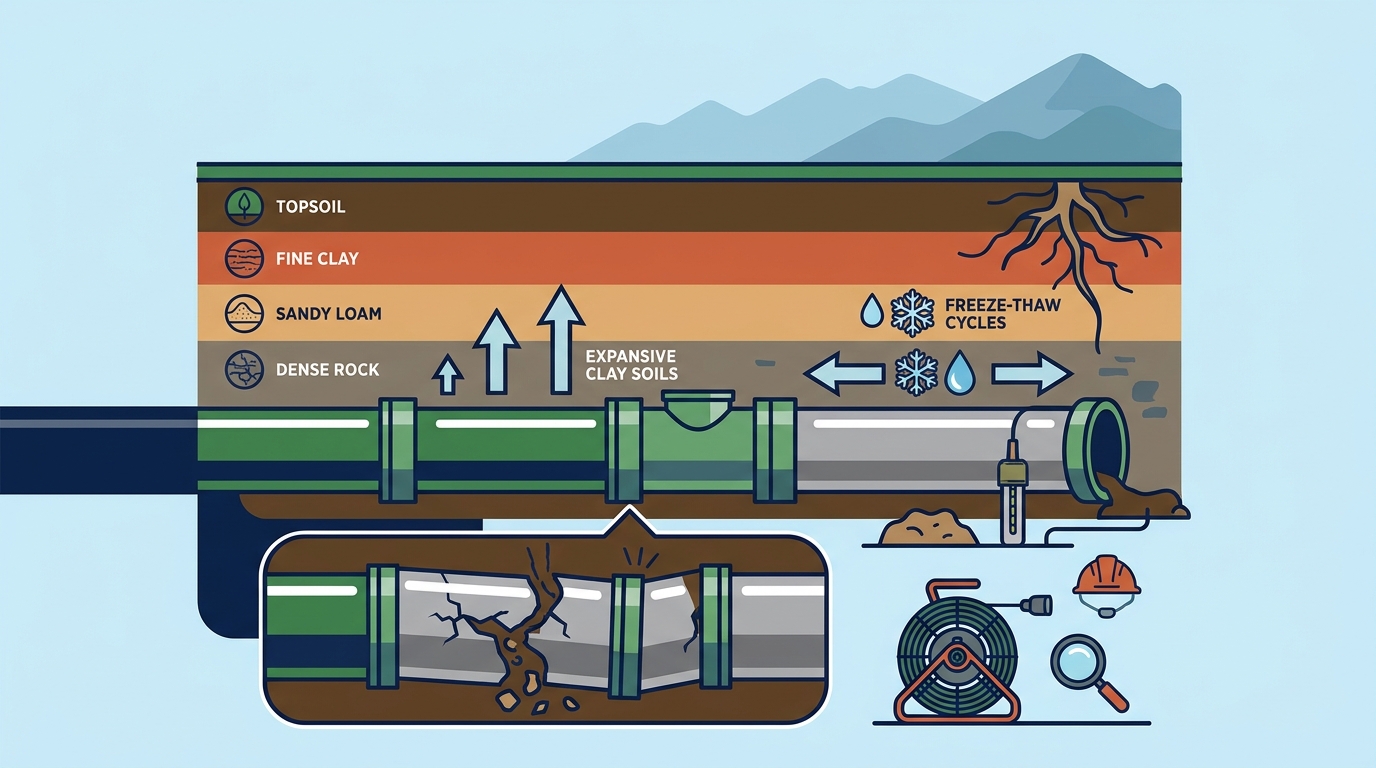
Soil expansion is the process where soil increases in volume when it absorbs moisture. In Colorado, many areas contain expansive clay soils that swell significantly during wet seasons. This swelling exerts immense lateral pressure on underground pipes. Over time, this pressure can cause pipes to shift, crack, or collapse. The movement is often imperceptible on the surface but devastating to buried infrastructure.
Conversely, during dry periods, these soils shrink and pull away from the pipes. This creates voids that allow soil to settle into the pipe structure. The repeated cycle of swelling and shrinking weakens the pipe material. Cast iron and clay pipes are particularly vulnerable to this mechanical stress. Homeowners should be aware that even well-installed pipes can suffer from this natural geological activity.
Freeze-Thaw Cycles
Freeze-thaw cycles are a defining characteristic of Colorado's climate. When water in the soil freezes, it expands by approximately 9 percent. This expansion pushes against the surrounding earth and any buried pipes. The resulting pressure can fracture rigid pipe materials. As the ground thaws in the spring, the soil settles unevenly. This uneven settlement can cause pipes to shift out of alignment.
Offset joints are a common result of this shifting. When pipe sections move, the seals between them can break. This leads to leaks and infiltration of groundwater. The repeated stress accelerates the deterioration of the entire sewer line. In Northern Colorado, where winters are cold and springs are wet, this cycle is a constant threat to underground utilities.
Clay Geology in Northern Colorado
Clay geology is prevalent in the Front Range and Northern Colorado regions. These soils have a high plasticity index, meaning they change shape easily with moisture changes. The specific mineral composition of local clay affects how aggressively it expands. Some clays are more reactive than others, leading to greater movement. This variability means that two homes on the same street can experience different levels of soil pressure.
The depth of the sewer line also matters in clay soils. Shallow lines are more susceptible to surface moisture changes. Deeper lines may be more stable but are harder to repair if damaged. Understanding the specific soil profile of a property is essential for predicting sewer line longevity. Foothills Home Inspections evaluates these factors during our assessments to provide accurate risk assessments.
Root Intrusion and Moisture
Root intrusion is a primary cause of sewer line blockages in Colorado. Tree roots seek out moisture and nutrients, which they find in leaking pipes. The moisture retained by expansive soils creates an ideal environment for root growth. Roots can penetrate small cracks or loose joints in the pipe. Once inside, they grow rapidly and create dense mats that block flow. according to How Do I
The presence of roots indicates an underlying leak or structural weakness. This is often a sign of soil movement or material failure. Removing the roots is only a temporary fix if the pipe remains damaged. The soil conditions that caused the initial leak will likely cause it again. A comprehensive inspection can identify both the root blockage and the source of the leak.
The Value of Video Scoping
Video scoping is the most effective way to assess sewer line condition. This technology allows inspectors to view the interior of the pipe in real-time. It reveals issues that are invisible from the surface. Inspectors can identify cracks, offsets, corrosion, and root intrusion. The video record provides clear evidence of the pipe's condition.
Knowing the pipe material is crucial for interpreting the scope. Cast iron pipes corrode from the inside over time. Clay pipes are brittle and prone to cracking from soil pressure. PVC pipes are more resistant to corrosion but can still suffer from joint failure. Foothills Home Inspections uses state-of-the-art camera technology to provide detailed reports. This information helps buyers make informed decisions and sellers prepare for negotiations.
Key Takeaways
- Expansive clay soils in Colorado exert significant pressure on underground pipes.
- Freeze-thaw cycles cause soil expansion and settlement, leading to pipe offsets.
- Root intrusion is often a symptom of underlying leaks caused by soil movement.
- Video scoping is essential for identifying internal pipe damage and material type.
- Soil conditions vary by location, making local expertise critical for accurate assessments.
- Regular retesting and monitoring are recommended for homes in high-risk soil areas.
Frequently Asked Questions
What is the most common cause of sewer line damage in Colorado?
Soil movement, particularly from expansive clays and freeze-thaw cycles, is the most common cause. This movement stresses the pipes, leading to cracks and offsets.
How often should I have my sewer line scoped?
It is recommended to have your sewer line scoped every 18 to 24 months, or immediately if you notice slow drains or backups.
Do all soil types in Colorado affect pipes the same way?
No, expansive clays are more problematic than sandy or gravelly soils. The specific mineral composition of the soil determines its reactivity.
Can I fix a sewer line damaged by soil movement?
Yes, options include trenchless repair, pipe replacement, or soil stabilization. The best option depends on the extent of the damage.
Does Foothills Home Inspections offer sewer scoping?
Yes, we provide certified sewer scoping services in Northern Colorado using advanced camera technology.