

Plumbing defects are among the most commonly reported issues in a home inspection report, yet many buyers wonder just how deep an inspector can dig. The short answer is yes, a qualified home inspector can catch a wide range of major plumbing problems during a standard evaluation. However, some hidden issues lurking behind walls or underground require specialized tools like a sewer scope or thermal imaging to fully diagnose. If you are buying a home in Northern Colorado, understanding what a home inspector checks, and what falls outside their scope, can save you thousands of dollars in surprise repairs.
What Home Inspectors Check in a Plumbing System
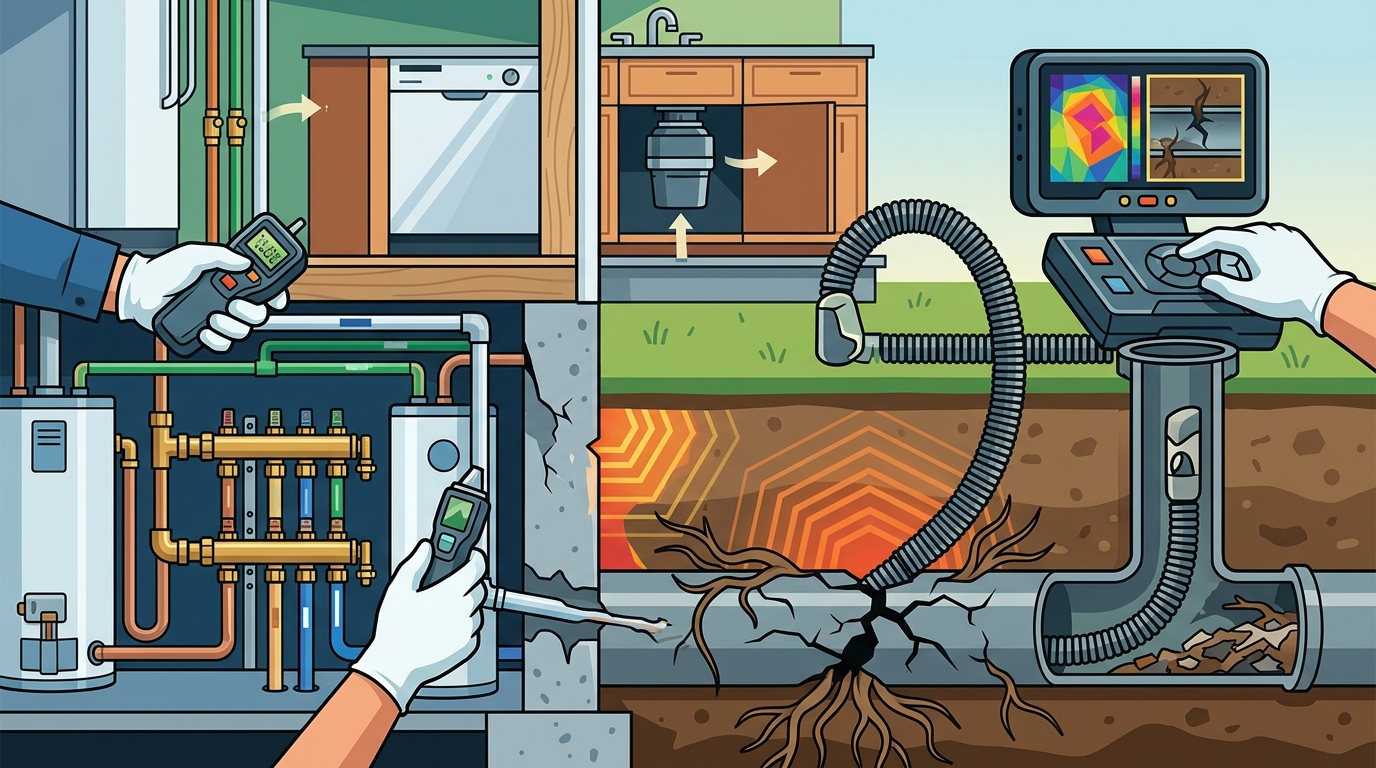
A plumbing inspection is a systematic evaluation of all accessible plumbing components in a home. During a comprehensive home inspection, the inspector operates every fixture, including sinks, tubs, showers, toilets, and faucets, to identify leaks, slow drains, and functional defects.
Inspectors also evaluate the water heater for age, corrosion, proper venting, and leaks. They check visible supply and drain piping, sump pumps, shutoff valves, and water pressure. The goal is to document anything that could signal an existing defect or a future expense so you can make an informed purchasing decision.
Fixtures and Drains
The inspector fills sinks and releases water quickly to stress-test drains and trap connections. This technique forces a large volume of water through the system at once and often reveals leaks that would not otherwise be visible during normal use.
Water Heater Evaluation
A water heater inspection covers the energy source, capacity, temperature setting, venting, and signs of corrosion or leaking. For gas models, the inspector also looks for gas leaks and confirms that combustion gases vent properly to the exterior.
Major Plumbing Problems Inspectors Commonly Find
Home inspectors routinely identify plumbing defects that range from minor annoyances to serious structural threats. The table below outlines the most common findings and their typical severity.
| Plumbing Issue | Severity | Common Cause |
|---|---|---|
| Leaky faucets and fixtures | Minor to Moderate | Worn seals, faulty valves |
| Low water pressure | Moderate | Corroded pipes, failing regulator |
| Slow or backed-up drains | Moderate to Major | Clogs, tree root intrusion |
| Water heater defects | Moderate to Major | Age, corrosion, faulty TPR valve |
| Active leaks behind fixtures | Major | Failed connections, pipe damage |
| Improper venting | Major | Missing or blocked vent stacks |
| Sewer line blockage | Major | Root intrusion, pipe collapse |
Improper venting is a plumbing defect where the vent stack system fails to properly route sewer gases out of the home and equalize pressure in the drain lines. It can cause gurgling sounds, slow drainage, and dangerous gas buildup indoors.
Hidden Issues Beyond a Standard Inspection
A standard home inspection covers readily accessible components. Inspectors cannot see inside walls, under slabs, or underground without specialized equipment. This means some plumbing problems, especially in the sewer lateral or behind finished walls, may not be fully diagnosed during a visual inspection alone.
When an inspector suspects a deeper issue, they will recommend further evaluation by a licensed plumber or suggest add-on services. At Foothills Home Inspections, we provide clear recommendations in our detailed inspection reports so you know exactly what warrants follow-up.
Why a Sewer Scope Inspection Matters
A sewer scope inspection is a specialized service where a small camera is fed through the sewer lateral to visually evaluate the pipe from the inside. This is especially important for homes in the Fort Collins area, where mature trees and aging clay pipes are common.
A sewer scope can detect cracked or collapsed pipe sections, tree root intrusion, improper grading, and buildup that a standard inspection simply cannot reveal. Sewer line repairs can cost anywhere from $3,000 to $25,000, making a sewer scope one of the smartest investments a buyer can make during due diligence.
When to Request a Sewer Scope
Any home older than 20 years should have a sewer scope. Homes with large trees near the sewer line, a history of slow drains, or cast iron and clay piping are especially high-risk. In Northern Colorado, we recommend a sewer scope on virtually every home purchase.
How Thermal Imaging Reveals Plumbing Leaks
Thermal imaging is a non-invasive diagnostic technique that uses an infrared camera to detect temperature differences on surfaces. Moisture from a hidden pipe leak creates a cooler zone behind a wall or under a floor that shows up clearly on an infrared scan.
This technology allows inspectors to identify potential leaks, condensation issues, and moisture intrusion without cutting into walls. It is not included in a standard inspection but is available as an add-on through Foothills Home Inspections when deeper investigation is warranted.
Outdated Pipe Materials That Raise Red Flags
One important thing a home inspector evaluates is the type of piping visible throughout the home. Certain materials used in past decades are now known to be problematic.
Polybutylene Pipes
Polybutylene is a type of plastic resin used in residential plumbing between 1978 and 1995. Oxidants like chlorine in public water supplies cause this material to become brittle over time, leading to micro-fractures and eventual system failure. Any home with polybutylene piping deserves serious attention.
Galvanized Steel Pipes
Galvanized pipes were common before the 1960s. They corrode from the inside out, restricting water flow and potentially leaching lead into the drinking water supply. An inspector will note the presence of galvanized piping and recommend evaluation by a licensed plumber.
Key Takeaways
- A qualified home inspector evaluates all visible and accessible plumbing components, including fixtures, drains, water heaters, and supply piping.
- Common major findings include active leaks, low water pressure, improper venting, water heater defects, and outdated pipe materials.
- Hidden plumbing behind walls and underground sewer lines require specialized tools like sewer scopes and thermal imaging for full diagnosis.
- Polybutylene and galvanized steel pipes are red-flag materials that an inspector will document and refer to a licensed plumber.
- A sewer scope inspection can save you thousands by catching root intrusion, pipe collapse, and grading issues before you close on a home.
- The inspector's job is not to pass or fail a home but to give you an objective snapshot of the plumbing system's current condition.
- Always review your inspection report carefully and follow up on any recommendations for further evaluation.
Frequently Asked Questions
Does a standard home inspection include plumbing?
Yes. A standard home inspection includes an evaluation of all visible and accessible plumbing components such as fixtures, drains, water heaters, supply piping, and shutoff valves. However, it does not include invasive testing or inspection of pipes hidden behind walls or underground.
Can a home inspector detect a slab leak?
A home inspector may notice signs of a slab leak, such as unexplained wet spots, low water pressure, or elevated water meter readings. Confirming the leak typically requires specialized leak detection equipment used by a licensed plumber.
What is a sewer scope inspection?
A sewer scope inspection is a service where a small video camera is inserted into the sewer lateral to visually examine the inside of the pipe. It identifies cracks, root intrusion, blockages, and grading problems that are invisible from the surface. Learn more about sewer scope inspections offered by Foothills Home Inspections.
How much do plumbing repairs cost after a failed inspection?
Costs vary widely. A leaky faucet repair might cost $100 to $300, while a full sewer line replacement can run $3,000 to $25,000 or more. Identifying these issues before closing gives buyers leverage to negotiate repairs or credits.
Should I get a separate plumbing inspection?
If your home inspector flags significant plumbing concerns, or if the home is older with potentially outdated piping, hiring a licensed plumber for a focused evaluation is a smart investment. This provides a deeper assessment than a general inspection alone.
What plumbing issues are deal-breakers?
There is no universal deal-breaker. However, a collapsed sewer line, extensive polybutylene piping, or active leaks causing structural damage are among the most serious findings. Your inspector's report will provide context about severity so you can decide what is acceptable.
Does Foothills Home Inspections offer sewer scopes and thermal imaging?
Yes. In addition to comprehensive home inspections, Foothills Home Inspections offers sewer scope inspections, radon testing, thermal imaging, and other add-on services throughout Fort Collins and the surrounding 50-mile radius.
Protect Your Investment with a Thorough Inspection
Do not let hidden plumbing problems turn your dream home into an expensive headache. Book your home inspection today with Foothills Home Inspections and add a sewer scope for complete peace of mind. Serving Fort Collins, Loveland, Greeley, Windsor, and all of Northern Colorado.