
How to Prepare Your Home for an Inspection: A Seller's Checklist
A home inspection can feel nerve-wracking, but a little preparation goes a long way. Whether you accepted an offer yesterday or you are planning a pre-listing inspection, getting your property ready helps the inspector work efficiently and keeps surprises to a minimum. A home inspection is a comprehensive, non-invasive visual evaluation of a property's structure and major systems. It is not a pass-or-fail test. The goal is to give buyers an objective snapshot of the home's current condition so everyone can make informed decisions. Below you will find a room-by-room checklist, practical tips, and answers to common questions from homeowners across Northern Colorado.
Understand What an Inspector Evaluates
A residential home inspector evaluates the visible and accessible components of a home and provides a professional opinion on its condition at the time of the inspection. At Foothills Home Inspections we examine the roof, exterior, foundation, plumbing, electrical, HVAC, interior, and installed appliances. Knowing what is on the inspector's list helps you focus your prep time where it matters most.
According to the American Society of Home Inspectors (ASHI), a standard inspection covers structural components, exterior surfaces, roofing, plumbing, electrical, heating, cooling, insulation, ventilation, and interior finishes. The typical inspection takes two to four hours depending on the size and age of the home.
Prep the Exterior and Landscaping
The exterior is the first thing an inspector sees. Taking 30 minutes to walk the perimeter can prevent unnecessary flags in your report.
Trim Vegetation and Clear Access
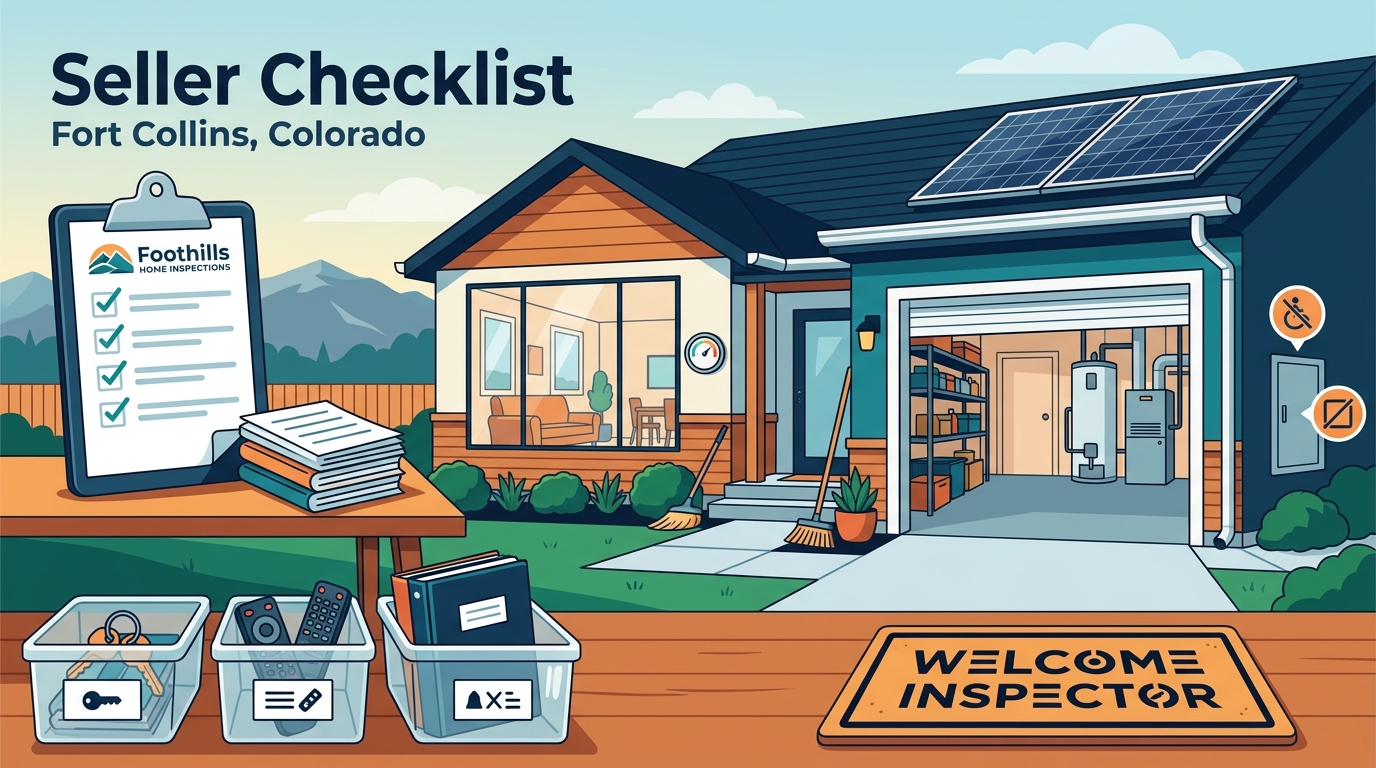
Cut back shrubs and branches that touch siding, windows, or the roofline. Move trash bins, garden hoses, and yard tools away from the foundation so the inspector can walk the full perimeter without obstruction.
Check Drainage and Grading
Grading is the slope of soil around the foundation. Soil should slope away from the house to prevent water intrusion. Fill low spots near the foundation with compacted soil and make sure downspouts extend at least four feet from the wall.
Inspect the Roof from Ground Level
Look for missing or damaged shingles and clean out gutters. These steps can prevent water-related issues that concern both inspectors and buyers. If you notice common issues that come up during inspections, consider addressing them before the appointment.
Clear Interior Access Points
Inspectors need to reach the electrical panel, water heater, furnace, attic hatch, and crawlspace entry. Move boxes, storage bins, and furniture away from these areas. If a component is blocked, the inspector must note it as "not accessible" in the report, which can raise concerns for buyers.
Unlock all doors, including garage side doors, utility rooms, and gates to the backyard. A tidy home leaves the impression of a well-maintained property and helps the inspector focus on the bigger picture rather than minor clutter.
Service Major Systems Before Inspection Day
HVAC, plumbing, and electrical are three of the most closely evaluated systems. A little maintenance ahead of time can make a big difference.
| System | Quick Prep Steps | Why It Matters |
|---|---|---|
| HVAC | Replace air filter; run heat and A/C to verify operation; clear debris from exterior condenser | Dirty filters and non-functional systems are among the most common inspection findings |
| Plumbing | Fix dripping faucets; test all toilets; check under sinks for leaks; run garbage disposal | Slow drains and active leaks signal deferred maintenance |
| Electrical | Replace burnt-out bulbs; test GFCI outlets (press reset/test buttons); ensure panel cover is accessible | Non-functioning lights force the inspector to flag unknown electrical issues |
| Water Heater | Confirm pilot light is on; check for corrosion or pooling water at base | Water heaters have a 10-to-15-year lifespan and are a common negotiation point |
| Appliances | Run dishwasher, oven, microwave, and garage door opener to confirm operation | Foothills inspectors test all installed appliances as part of a standard inspection |
Address Safety Items First
Safety observations are a major part of every home inspection checklist. Inspectors commonly note trip hazards, missing handrails or guardrails, unsafe stairways, improper venting, electrical safety concerns, and fire separation issues in garages.
Test all smoke detectors and carbon monoxide alarms and replace dead batteries. Verify that fire extinguishers are accessible and current. In Colorado, carbon monoxide detectors are required by law in all residential properties. Addressing these small items before the inspector arrives removes easy flags from your report.
Gather Documents and Records
Set out receipts, warranties, and service records on the kitchen counter or dining table. Helpful documents include HVAC service records, roof replacement or repair receipts, radon test results, sewer scope reports, and any permits for remodeling work.
Providing documentation shows the buyer and inspector that you have proactively maintained the home. It can also reduce follow-up questions and help negotiations proceed more smoothly.
Quick-Reference Preparation Checklist
- Trim vegetation away from siding, roof, and foundation
- Clean gutters and extend downspouts
- Ensure proper grading slopes away from the home
- Unlock all doors, gates, and utility areas
- Clear access to electrical panel, water heater, furnace, attic, and crawlspace
- Replace HVAC filters and run heating and cooling systems
- Fix leaky faucets and running toilets
- Replace burnt-out light bulbs
- Test GFCI and AFCI outlets
- Test smoke and CO detectors; replace batteries
- Run all appliances (dishwasher, oven, disposal, garage door opener)
- Set out maintenance records and warranties
- Secure or remove pets on inspection day
Key Takeaways
- A home inspection is not a pass-or-fail test. It is an objective evaluation of your home's current condition.
- Clearing access to the electrical panel, attic, crawlspace, and water heater is the single most impactful prep step.
- Replacing air filters, fixing dripping faucets, and swapping burnt-out bulbs eliminates easy flags.
- Safety items like smoke detectors, CO alarms, and handrails are scrutinized closely by inspectors.
- Proper exterior drainage and grading prevent moisture intrusion findings, one of the biggest parts of any inspection.
- Gathering service records and receipts signals proactive maintenance and builds buyer confidence.
- A pre-listing inspection gives sellers a head start by identifying issues before a buyer's inspector arrives.
Frequently Asked Questions
How long does a typical home inspection take?
Most home inspections take two to four hours, depending on the size, age, and condition of the property. Larger or older homes may require additional time.
Should sellers be present during the inspection?
It is generally best for sellers to leave during the inspection. This gives the buyer and inspector space to discuss findings openly. Make sure the home is unlocked and pets are secured before you go.
Can I fix things during the inspection?
No. All repairs should be completed before the inspector arrives. Attempting to fix issues mid-inspection is disruptive and can appear as though you are trying to hide problems.
What are the most common issues found in Northern Colorado inspections?
In the Fort Collins area, common findings include hail-damaged shingles, poor attic ventilation, grading that slopes toward the foundation, aging water heaters, and radon levels above the EPA action level of 4 pCi/L. Consider scheduling radon testing alongside your inspection.
Does a home inspection cover radon and sewer lines?
A standard inspection does not include radon testing or sewer scope evaluations. These are offered as add-on services. Foothills Home Inspections provides both radon testing and sewer scope inspections so you can bundle them with your home inspection.
What happens if major issues are found?
The inspection report identifies defects and recommends actions such as repair, further evaluation by a specialist, or ongoing monitoring. Buyers may use findings to negotiate repairs or price adjustments through a home inspection contingency.
Is a pre-listing inspection worth the cost?
A pre-listing inspection is a home inspection the seller pays for before listing. It gives you a head start on identifying what to fix and signals transparency to potential buyers. Many sellers in Northern Colorado find it reduces surprises and speeds up the closing process.
How do I choose a qualified home inspector?
Look for a certified and insured inspector with local experience. Organizations like InterNACHI and ASHI set high standards for training and ethics. You can also ask your real estate agent for recommendations or view a sample report to evaluate thoroughness.
Ready to Schedule Your Inspection?
Foothills Home Inspections serves Fort Collins and a 50-mile radius across Northern Colorado. Whether you need a buyer's inspection, pre-listing inspection, radon testing, or sewer scope, we provide detailed reports with photos and clear recommendations. Book your inspection today and move forward with confidence.