

You just received a home inspection report and it is 40 pages long. Before panic sets in, take a breath. A home inspection report is a detailed document that outlines the current condition of a home's major systems and components, from the roof down to the foundation. Not every item flagged is a deal-breaker. The key is knowing which findings matter most, which ones are routine maintenance, and which ones deserve immediate attention. In this guide, we break down exactly what to focus on so you can make a confident, informed decision about your next home purchase in Northern Colorado or anywhere else.
How a Home Inspection Report Is Structured
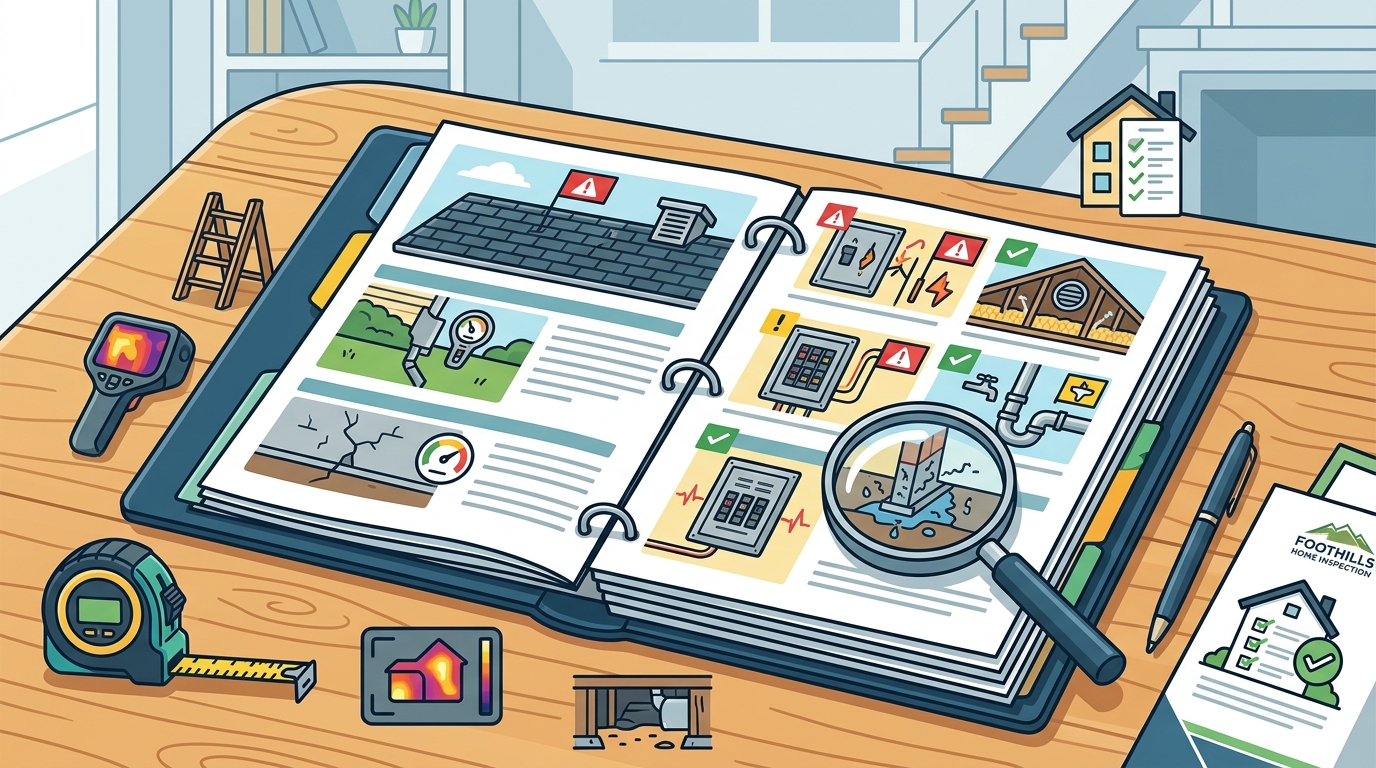
Most professional reports follow a consistent layout. You will find basic property information, a system-by-system assessment with photos, and a summary page that highlights the most critical findings. A summary page is the section of the report that consolidates all major defects, safety concerns, and recommended actions into one quick-reference list.
Rating Systems and Color Codes
Many inspection companies use color-coded or letter-coded ratings. Green typically means satisfactory, yellow signals a moderate concern, and red indicates a major issue requiring repair. Some reports use letter codes such as "I" for inspected, "S" for safety concern, and "D" for defect. Start with the summary, then work backward into the detailed sections for context.
Photos and Descriptions
Quality reports pair every deficiency with a photograph and a written description. At Foothills Home Inspections, our reports include clear photos, plain-language explanations, and recommended next steps so you know exactly what you are looking at.
Roof and Exterior Findings
The roof is one of the most expensive components of any home. Inspectors evaluate shingles, flashing, vents, chimneys, skylights, gutters, and drainage. Look for notes about missing or damaged shingles, improper flashing, hail or wind damage, and any language describing the roof as nearing "end of life." In Northern Colorado, hail damage is especially common, making this section critical for Fort Collins-area buyers.
On the exterior, watch for mentions of wood rot, cracking in siding, improper grading that directs water toward the foundation, and deteriorating decks or railings. These items can escalate quickly if left unaddressed.
Foundation and Structural Concerns
A structural defect is any issue affecting the load-bearing components of a home, including the foundation walls, floor joists, and roof framing. This section of the report deserves your closest attention. Look for language about cracking, settlement, sagging floors, or bowing walls.
What Is Normal vs. Concerning
Hairline cracks in a concrete foundation are common and usually cosmetic. Horizontal cracks, stair-step cracks in block walls, or cracks wider than 1/4 inch may indicate active movement and warrant evaluation by a structural engineer. Your inspector should note the severity and recommend further evaluation when appropriate.
Electrical and Plumbing Systems
Electrical and plumbing deficiencies are among the most important findings in any report. According to the International Association of Certified Home Inspectors (InterNACHI), inspectors evaluate wiring, breaker panels, grounding, outlets, GFCI/AFCI protection, and visible components for safety hazards.
| System | Common Findings | Severity Level |
|---|---|---|
| Electrical Panel | Double-tapped breakers, missing knockouts | Moderate to High |
| Outlets | Missing GFCI protection in wet areas | High (safety) |
| Wiring | Amateur splices, knob-and-tube remnants | High |
| Water Heater | Corrosion, missing TPR discharge pipe | Moderate to High |
| Supply Piping | Polybutylene or galvanized steel | Moderate |
| Drains | Slow drains, improper venting | Low to Moderate |
If the report flags outdated wiring or panel issues, consider getting a licensed electrician to provide a second opinion. For plumbing, a sewer scope inspection can reveal hidden problems in underground drain lines that a standard inspection cannot see.
HVAC System Evaluation
HVAC is an abbreviation for Heating, Ventilation, and Air Conditioning, and it is one of the most costly systems to replace. The inspector operates the furnace and air conditioner using normal controls and checks for proper function, unusual noises, and safety concerns such as cracked heat exchangers or improper venting of combustion gases.
Pay attention to the age of the equipment. Furnaces typically last 15 to 25 years, and air conditioners last 12 to 20 years. If your report notes a system near end of life, budget accordingly. The U.S. Department of Energy recommends replacing aging HVAC equipment with high-efficiency models to reduce energy costs.
Moisture and Water Intrusion
Moisture intrusion is one of the biggest concerns in any home inspection. Water damage can lead to mold growth, structural deterioration, and expensive remediation. Look for report language describing staining on ceilings or walls, condensation in the attic, standing water in crawlspaces, or evidence of past flooding in basements.
Inspectors may use moisture meters or thermal imaging to detect hidden moisture that is not visible to the naked eye. In Colorado's semi-arid climate, poor drainage and snowmelt patterns create unique moisture challenges that local inspectors understand well.
Safety Observations You Should Never Ignore
Safety concerns should always be at the top of your priority list. Common safety findings include trip hazards, missing handrails or guardrails, unsafe stairways, fire separation issues in attached garages, and improper venting of gas appliances. These items affect the well-being of everyone in the home and often require prompt correction.
In Northern Colorado, radon testing is another essential safety consideration. Radon is a colorless, odorless radioactive gas that enters homes through cracks in the foundation. The EPA recommends mitigation for levels at or above 4 pCi/L, and many homes along the Front Range test above that threshold.
Key Takeaways
- Start with the summary page to quickly identify major defects and safety concerns.
- Focus on the "big five" systems: roof, foundation, electrical, plumbing, and HVAC.
- Look for red flags like active water intrusion, structural movement, and safety hazards.
- Not every finding is a deal-breaker. Many items are routine maintenance or minor repairs.
- Ask your inspector questions. Most professionals are happy to walk you through the report in detail.
- Use the report as a negotiation tool to request repairs or credits from the seller.
- Consider add-on services like radon testing and sewer scopes for a complete picture of the property.
Frequently Asked Questions
What is a home inspection report?
A home inspection report is a detailed document produced by a certified inspector that evaluates the visible and accessible components of a property, including the roof, foundation, electrical, plumbing, and HVAC systems. It identifies defects, safety concerns, and maintenance items.
How long does it take to get a home inspection report?
Most inspectors deliver the report within 24 to 48 hours after the inspection. At Foothills Home Inspections, we aim to provide same-day or next-day delivery so you can move quickly during your transaction.
Should I attend the home inspection?
Yes. Attending the inspection allows you to ask questions in real time and see issues firsthand. Your inspector can provide context that goes beyond what the written report alone conveys.
What are the biggest red flags in a home inspection report?
The most serious red flags include foundation cracking or movement, active water intrusion, electrical panel hazards, roof damage requiring full replacement, and evidence of mold. These findings can involve significant repair costs.
Can I negotiate repairs based on the inspection report?
Absolutely. Buyers commonly request that sellers complete repairs, provide closing credits, or reduce the sale price based on inspection findings. Your real estate agent can guide this negotiation.
Does a home inspection cover radon or sewer lines?
A standard home inspection does not typically include radon testing or sewer line evaluation. However, these are available as add-on services. In Colorado, both are highly recommended due to regional radon levels and aging sewer infrastructure.
How much does a home inspection cost in Fort Collins?
Home inspection costs in the Fort Collins area typically range from $350 to $600 depending on the size and age of the home. Add-on services like radon testing and sewer scopes are priced separately.
What happens if the inspection reveals major problems?
You have several options: negotiate repairs or credits with the seller, hire specialists for further evaluation, adjust your offer price, or exercise your inspection contingency to walk away from the deal.
Get a Thorough Home Inspection in Northern Colorado
Understanding your inspection report starts with choosing the right inspector. At Foothills Home Inspections, we provide detailed, photo-rich reports with clear explanations so you can make confident decisions. We serve Fort Collins and the surrounding 50-mile radius with comprehensive home inspections, radon testing, sewer scopes, and more.
Book your inspection today and take the guesswork out of your next home purchase.